dongchuanwl


Submit your requirements to us, and we will contact you within 24 hours.
Stacking Racks: Expanded Q&A Guide for Warehouse Efficiency
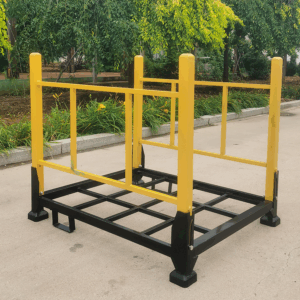
1. What is a stacking rack, and how does it work?
A stacking rack is a heavy-duty (usually steel) storage unit designed to hold cargo while enabling stable vertical stacking. Its base frame (often pallet-compatible) supports goods, and reinforced posts/latches lock adjacent racks together when stacked (3–5 layers, depending on load). This turns horizontal floor space into vertical storage capacity.
2. What load capacities do stacking racks support?
Most standard models handle 500–2,000 kg per layer; heavy-duty versions (for industrial parts) can hold up to 5,000 kg per layer. Load limits drop with each added layer (e.g., a 1,000 kg/rack model may only support 3 layers total).
3. What are the key design features for durability?
- Material: Galvanized steel resists rust (ideal for cold chains/wet environments); powder-coated steel adds scratch resistance.
- Base: Reinforced grid/solid platforms prevent small items from falling; forklift-entry points (4-way access) simplify handling.
- Posts: Notched or tapered posts ensure secure stacking without slipping.
4. How to maintain stacking racks?
- Inspect posts/latches quarterly for bending or wear.
- Clean rust spots with sandpaper + anti-rust paint.
- Avoid overloading (follow manufacturer load charts).
- Fold/collapse empty racks to prevent warping.
5. When should you choose stacking racks over pallets?
Pallets work for single-layer, bulk transport, but stacking racks:
- Protect fragile items (via enclosed frames).
- Allow direct access to individual layers (no need to unstack).
- Reduce product damage from shifting during storage.
6. What are emerging trends in stacking rack design?
- Smart racks: Integrated RFID tags track inventory in real time.
- Eco-friendly models: Recycled steel + biodegradable coatings.
- Customization: Adjustable post heights for irregular cargo (e.g., appliances, auto parts).